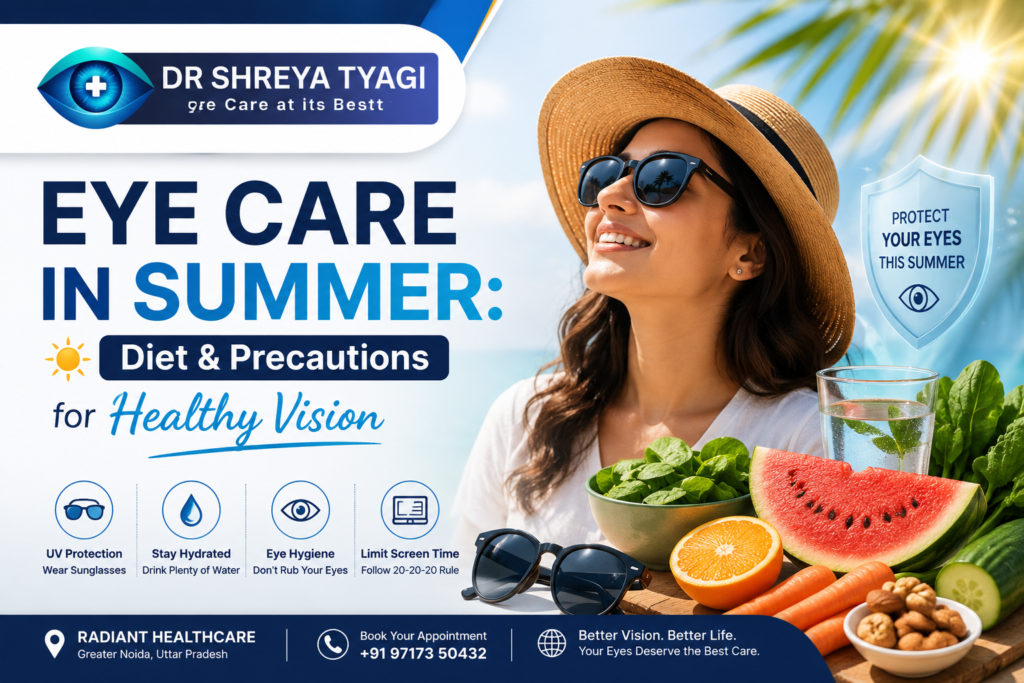
Summer brings longer days, bright sunshine, vacations, and outdoor activities. While most people focus on protecting their skin from the harsh sun, eye care is often overlooked. Excessive exposure to sunlight, heat, dust, pollution, and dehydration can negatively affect eye health and lead to discomfort, irritation, and even long-term vision problems.
Taking proper precautions and maintaining an eye-friendly diet can help keep your eyes healthy throughout the summer season. In this article, Dr. Shreya Tyagi shares practical tips to protect your eyes from the summer heat.
Why Are Eyes More Vulnerable During Summer?
The summer season exposes our eyes to several environmental factors, including:
- Increased ultraviolet (UV) radiation
- Hot and dry winds
- Dust and pollution
- Swimming pool chemicals
- Excessive screen exposure during vacations
- Dehydration
These factors can cause symptoms such as:
- Dry eyes
- Eye irritation
- Redness
- Itching
- Burning sensation
- Excessive tearing
- Eye fatigue
Ignoring these symptoms may worsen eye discomfort and affect vision quality.
Common Eye Problems During Summer
1. Dry Eyes
High temperatures and dry air can cause rapid evaporation of tears, leading to dry eye symptoms such as burning, irritation, and blurry vision.
2. Eye Allergies
Dust, pollen, and pollution levels often increase during summer, triggering allergic reactions that cause itching, redness, and watery eyes.
3. Conjunctivitis (Eye Infection)
Summer can increase the risk of viral and bacterial eye infections, especially in crowded places, swimming pools, and schools.
4. UV-Related Eye Damage
Prolonged exposure to ultraviolet rays may increase the risk of cataracts, retinal damage, and other vision-related problems over time.
Summer Eye Care Precautions
Wear UV-Protective Sunglasses
Choose sunglasses that block 99% to 100% of UVA and UVB rays. Good-quality sunglasses help reduce glare and protect the eyes from harmful solar radiation.
Stay Hydrated
Dehydration can reduce tear production and worsen dry eye symptoms. Drink sufficient water throughout the day, especially during outdoor activities.
Avoid Direct Sun Exposure
Try to avoid outdoor exposure between 11 AM and 4 PM when sunlight is strongest. Wearing a wide-brimmed hat can provide additional protection.
Protect Your Eyes from Dust
Use protective eyewear while riding a bike, traveling, or working in dusty environments. This helps prevent irritation and infections.
Limit Screen Time
Extended screen use can reduce blinking frequency, causing eye strain and dryness. Follow the 20-20-20 rule:
Every 20 minutes, look at something 20 feet away for 20 seconds.
Maintain Proper Eye Hygiene
- Wash hands frequently.
- Avoid touching or rubbing your eyes.
- Do not share towels, eye makeup, or contact lenses.
- Clean contact lenses properly as advised by your eye doctor.
Be Careful While Swimming
Swimming pool water often contains chlorine and microorganisms that can irritate the eyes. Wear swimming goggles to reduce the risk of infection.
Best Foods for Healthy Eyes During Summer
A nutritious diet plays a vital role in maintaining eye health.
1. Carrots
Carrots are rich in beta-carotene, which the body converts into Vitamin A. Vitamin A supports good vision and helps maintain healthy eye tissues.
2. Leafy Green Vegetables
Spinach, kale, and fenugreek leaves contain lutein and zeaxanthin, antioxidants that help protect the retina from damage.
3. Citrus Fruits
Oranges, lemons, sweet lime, and grapefruit are rich in Vitamin C, which supports eye health and reduces oxidative stress.
4. Watermelon
Watermelon helps maintain hydration and provides Vitamins A and C, both beneficial for eye health.
5. Cucumber
Cucumber contains high water content and can help keep the body hydrated during hot weather.
6. Fish
Fatty fish such as salmon, tuna, and sardines are rich in omega-3 fatty acids that support tear production and reduce dry eye symptoms.
7. Nuts and Seeds
Almonds, walnuts, sunflower seeds, and flaxseeds provide Vitamin E and healthy fats that help protect eye cells from damage.
8. Eggs
Eggs contain lutein, zeaxanthin, zinc, and Vitamin A, making them an excellent addition to an eye-friendly diet.
Signs You Should Visit an Eye Specialist
Consult an eye doctor if you experience:
- Persistent redness
- Eye pain
- Sudden blurred vision
- Excessive watering
- Light sensitivity
- Eye discharge
- Frequent headaches associated with vision problems
Early diagnosis can help prevent complications and protect long-term vision.
Frequently Asked Questions
Can summer heat affect eyesight?
While heat itself may not directly damage vision, prolonged exposure to UV rays, dehydration, and dry conditions can affect eye comfort and increase the risk of eye problems.
Are sunglasses necessary during summer?
Yes. Sunglasses with UV protection help protect the eyes from harmful ultraviolet radiation and reduce the risk of long-term eye damage.
Which fruits are best for eye health in summer?
Watermelon, oranges, mangoes, papaya, and sweet lime are rich in vitamins and antioxidants that support healthy vision.
How can I prevent dry eyes during summer?
Stay hydrated, avoid excessive screen use, wear protective eyewear outdoors, and consult an eye specialist if symptoms persist.
Conclusion
Summer can be challenging for eye health due to intense sunlight, heat, dust, and dehydration. Simple preventive measures such as wearing UV-protective sunglasses, staying hydrated, maintaining eye hygiene, and consuming a nutrient-rich diet can significantly reduce the risk of eye problems.
Protecting your eyes today can help preserve clear and healthy vision for years to come.
Consult Dr. Shreya Tyagi
If you are experiencing eye irritation, dryness, redness, allergies, or any vision-related concerns, schedule a comprehensive eye examination with Dr. Shreya Tyagi for expert evaluation and personalized treatment.